

Key Takeaways
- A well-organized kit saves time and reduces panic during minor injuries or illnesses.
- Most essential supplies cost under $40 total when bought in generic or store-brand form.
- Expired or missing items make a kit useless, so schedule a twice-yearly review.
- Children and adults in your household may need different supply sizes and formulations.
- Knowing when NOT to use your kit is as important as knowing how to use it.
Summary
26 items · 30 to 60 minutes to build or audit your kit
Why most home kits fail when you need them
The average family first aid kit fails in one of three ways: it is empty, it is expired, or nobody can find it under the bathroom sink. Building a kit that actually gets used means thinking about placement, organization, and regular upkeep, not just initial stocking.
A practical kit also has clear limits. It is for minor wounds, everyday illness management, and bridging the gap until professional care is available. For anything involving chest pain, difficulty breathing, severe bleeding, loss of consciousness, or a suspected poisoning, call 911 or get to an emergency room. This article is general health information, not medical advice. Always consult a qualified healthcare professional about your family's specific needs.
Pairing your kit with a broader approach to family wellness pays off over time. Our family preventive health checklist covers vaccines, screenings, and annual reviews that reduce how often minor issues turn into bigger ones.
Wound care essentials
Medications
Tools and monitoring
Documents and reference
What to stock and what to skip
Generic or store-brand versions of most supplies work identically to name-brand ones. Adhesive bandages, gauze rolls, antiseptic wipes, and acetaminophen are all available in generic form at a fraction of the cost. Buy the right quantities: a family of four does not need 200 bandages, but running out of gauze mid-treatment is a real problem.
Skip the novelty or redundant items that pad out pre-assembled commercial kits: decorative tins that do not seal well, finger splints in sizes your household will never use, or chemical cold packs that expire within six months. Spend that money on a good pair of trauma shears and a reliable digital thermometer instead.
Medication safety for children
Children's doses for common over-the-counter medications such as acetaminophen and ibuprofen are based on weight, not age alone. Never estimate a dose based on adult packaging. Ask your pediatrician in advance to confirm which medications and doses are appropriate for each child in your household, and write those instructions on a card kept inside the kit.
For households with children, medication formulations and doses differ significantly from adult versions. Never assume an adult dose is safe for a child, and always read package labels carefully. Ask your child's pediatrician in advance what over-the-counter medications are appropriate for your child's age and weight, so you are not guessing during a sick night. Our guide on what families can handle at home during sick season walks through which symptoms can wait and which need a call to the doctor.
Waterproof storage container
Keeps supplies dry, visible, and protected from humidity in bathroom or kitchen environments.
Digital thermometer
Provides accurate temperature readings for all ages, helping you decide whether a fever warrants a doctor call.
Trauma shears
Cut through tape, gauze, and light clothing quickly without risking additional injury near a wound.
Non-latex disposable gloves
Protect both the caregiver and the injured person from cross-contamination during wound care.
Zip-lock bags or compartment organizers
Group supplies by category so you can find what you need without emptying the whole kit.
Keeping your kit organized and current
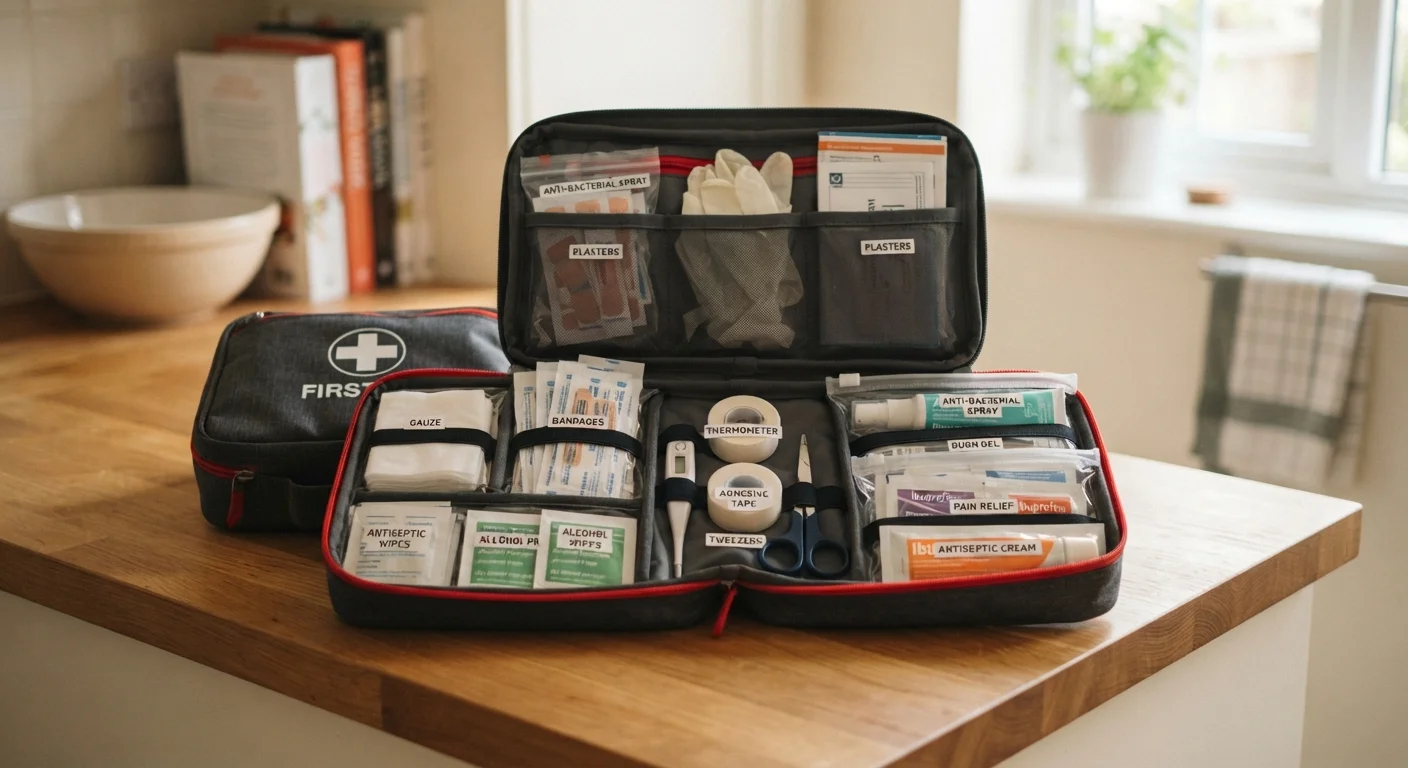
Store your main kit in a labeled, waterproof container on a high shelf away from children but accessible to adults. A second, smaller travel kit in your car or diaper bag handles incidents away from home. Label each compartment or use zip-lock bags grouped by category: wound care, medications, tools, and documents.
Twice a year, set a 15-minute appointment to audit the kit. Check expiration dates on medications and antiseptics, replace used or depleted items, and update the emergency contact sheet if your family's medical situation has changed. Linking this audit to daylight saving time changes gives you a reliable annual reminder on a schedule most families already notice.
Keep a laminated index card inside the kit listing the Poison Control hotline (1-800-222-1222 in the US), your family's primary care provider, and any member-specific notes such as known allergies or prescription medications. Good family health record keeping makes this card easy to create and update.
This article is for general informational purposes only and does not constitute medical advice. Consult a qualified healthcare professional for guidance specific to your family's health needs.