
Preventive Care vs. Reactive Care: Understanding the Difference and Why It Matters

Key Takeaways
- Preventive care aims to stop illness before it starts; reactive care treats illness after it appears.
- Many preventive screenings and vaccines are covered at no cost under the Affordable Care Act.
- Reactive care is often more expensive and intensive than the preventive measures that could have helped earlier.
- Both approaches have a role, but building preventive habits reduces how often reactive care becomes necessary.
- Clinical guidelines from bodies like the USPSTF define which screenings are recommended and at what ages.
Option A
Preventive Care
The proactive approach to staying healthy before problems arise.
Best for: Families who want to reduce long-term health costs and catch conditions early through screenings, vaccines, and healthy habits.
Option B
Reactive Care
Medical treatment delivered after a symptom, illness, or crisis appears.
Best for: Situations where an illness or injury has already occurred and requires diagnosis, treatment, or emergency intervention.
If you want to reduce out-of-pocket health costs over time
Preventive Care
Annual wellness visits, screenings, and vaccines often cost nothing under ACA-compliant plans and can detect problems before they require costly treatment.
If a symptom, injury, or acute illness has already appeared
Reactive Care
Reactive care is necessary when a health event is already underway. Prompt treatment in these situations can limit harm and speed recovery.
If you have children and want to protect their development
Preventive Care
Well-child visits and the childhood vaccination schedule are specifically designed to prevent serious illness and developmental problems from taking hold.
If you manage a chronic condition like diabetes or hypertension
Preventive Care
Regular monitoring, lifestyle counseling, and screenings help slow disease progression and reduce the risk of complications, though reactive care remains part of ongoing management.
How the two approaches differ
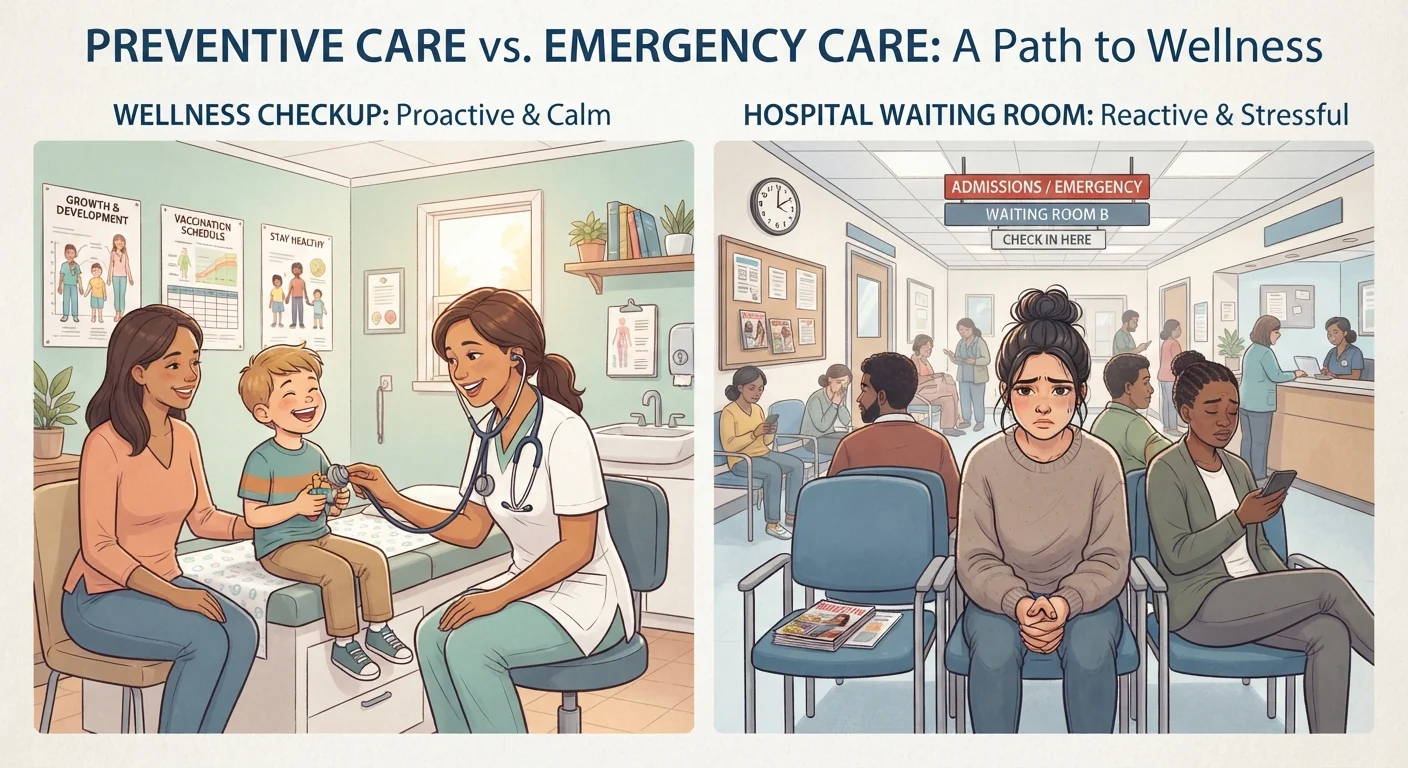
Preventive care refers to health services designed to stop disease from developing or to catch it at an early, more treatable stage. This includes routine physical exams, blood pressure checks, cholesterol screenings, vaccinations, and counseling on diet or tobacco cessation. The goal is to act before a person feels sick.
Reactive care, by contrast, begins when something has already gone wrong. A trip to the doctor for a persistent cough, a visit to the emergency room after a fall, or a course of antibiotics for an infection are all reactive. The health system responds to a problem that is already present.
Neither category is inherently avoidable. Accidents happen, infections spread, and even people who follow every recommended guideline will need reactive care at some point in their lives. The distinction matters because the two approaches carry very different timelines, costs, and outcomes. Understanding what each covers helps families plan more deliberately. For a detailed look at what counts as preventive under most insurance plans, see what preventive care actually covers.
| Criterion | Preventive Care | Reactive Care |
|---|---|---|
| When it occurs | Before illness or symptoms appear | After illness, injury, or symptoms appear |
| Primary goal | Prevent disease or catch it early | Diagnose and treat an existing condition |
| Typical cost to patient | Often $0 under ACA-compliant plans | Usually triggers copays, deductibles, or bills |
| Examples | Screenings, vaccines, wellness visits | ER visits, antibiotics, surgery, specialist care |
| Urgency | Scheduled, non-urgent | Often urgent or time-sensitive |
| Long-term impact | Reduces risk of costly future conditions | Addresses immediate health crisis |
| Guided by | USPSTF guidelines, CDC schedules | Physician diagnosis and clinical judgment |
The cost gap between prevention and treatment
Reactive care tends to be more expensive than preventive care, sometimes substantially so. A hospitalization for a heart attack, for example, carries costs that dwarf the price of the annual cholesterol screening and lifestyle counseling that can reduce cardiac risk. The same pattern holds for Type 2 diabetes, certain cancers, and complications from untreated high blood pressure.
Under the Affordable Care Act, many preventive services must be covered by most health insurance plans without cost-sharing, meaning no copay or deductible applies. This makes preventive care genuinely accessible for families with insurance. Preventive care benefits your insurance covers at no extra cost explains which specific services qualify. Reactive care, by contrast, almost always triggers cost-sharing, and emergency or specialist visits can generate significant bills.
Families managing tight budgets have a concrete financial reason to prioritize prevention where possible, not because reactive care is always avoidable, but because reducing its frequency has a real effect on household health spending over time. For broader context on managing those costs, the Managing Health Costs hub covers practical strategies.
What preventive care actually includes
Preventive care is not limited to an annual physical. Clinical guidelines published by the U.S. Preventive Services Task Force (USPSTF) define recommended screenings by age, sex, and risk factors. These include colorectal cancer screening beginning at age 45 for average-risk adults, blood pressure measurement at most routine visits, and depression screening for adolescents and adults.
Vaccines are a core part of prevention. The CDC's immunization schedule covers children from birth through adolescence and continues into adulthood with recommendations for flu, shingles, pneumonia, and other vaccines. For parents tracking their child's needs, pediatric preventive care checkups by age provides a clear timeline.
Lifestyle counseling, dental cleanings, and vision checks also fall under the broader umbrella of prevention, though coverage for dental and vision varies by plan. Hygiene practices, adequate sleep, physical activity, and not smoking reduce the risk of a wide range of conditions, and primary care providers are trained to discuss these during wellness visits.
USPSTF recommendations and your coverage
The U.S. Preventive Services Task Force assigns letter grades (A or B) to preventive services with strong evidence of benefit. Under the Affordable Care Act, most health insurance plans must cover A- and B-rated services without cost-sharing for eligible patients. Recommendations are updated periodically as new evidence emerges, so checking the USPSTF website or asking your primary care provider about current guidelines is worthwhile.
Building prevention into daily family life
Preventive care is not a single annual event. It is a set of ongoing habits layered on top of scheduled clinical visits. Hand-washing, adequate sleep, regular physical activity, and balanced nutrition all contribute to a lower disease burden over time, and none of them require a prescription or a specialist.
Families who find it hard to stay on top of appointments and screenings often benefit from a simple checklist approach. Your family's annual preventive health checklist covers vaccines, screenings, dental visits, and lifestyle reviews by age group. For households with busy schedules, building a preventive care routine around a busy family schedule offers practical ways to fit these habits in without major disruption.
One common barrier is the belief that a doctor visit is only necessary when something is wrong. That mindset is addressed directly in common myths about preventive health that lead families astray. Skipping routine screenings because you feel well is one of the patterns most likely to allow a manageable condition to become a serious one.
This article provides general health information for educational purposes and is not a substitute for personalized medical advice. Consult a qualified healthcare professional for guidance specific to your health needs or those of your family members.