
Starting a Home Workout Routine When You Have No Equipment and No Experience

Key Takeaways
- Bodyweight exercises like squats, push-ups, and lunges build real strength without any gear.
- A session as short as 15 minutes, three times a week, is a reasonable starting point.
- Consulting a healthcare professional before starting any new exercise program is important if you have health concerns.
- Consistency over time matters more than intensity in the first weeks.
- Free community resources such as public parks and library fitness DVDs can support your routine.
Start here
Why starting without equipment is actually fine
Before you begin
What to do before your first session
Take action
Your first week: a simple starting framework
Build the habit
Keeping it going after week one
Why starting without equipment is actually fine
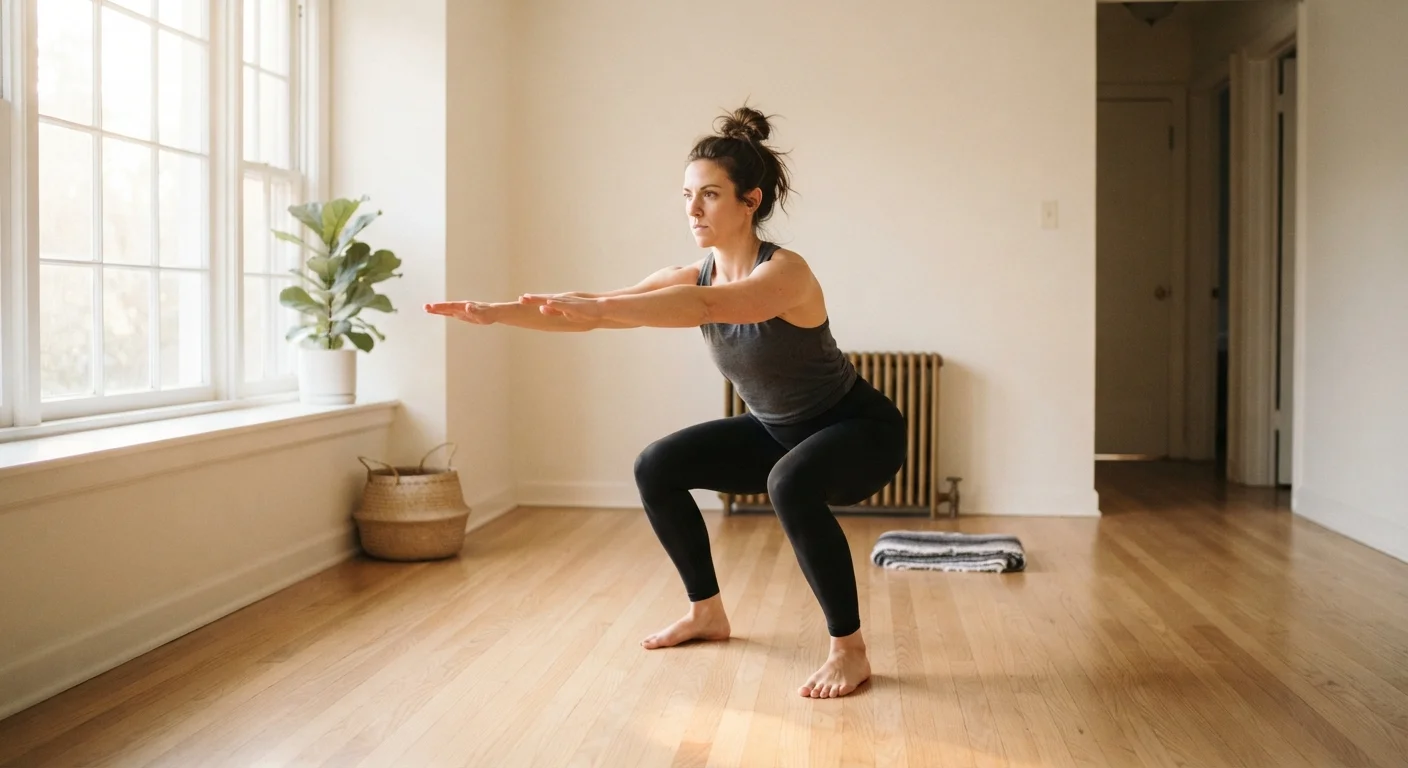
The idea that you need a gym membership or expensive gear to get fit is common, and it is wrong. Your body provides all the resistance a beginner needs. Movements like squats, push-ups, lunges, glute bridges, and planks work large muscle groups effectively, and none of them require anything you do not already have.
Bodyweight training builds genuine strength and improves cardiovascular health at a beginner level. Research consistently supports the idea that progressive bodyweight exercise improves muscle endurance and functional fitness. The catch is that progress requires gradually making movements harder over time, not buying new tools.
For families, there is another practical upside: no equipment means no storage problem and no upfront cost. Workouts can happen in a living room, backyard, or hallway. Children can join in, which turns exercise into shared family time rather than a separate chore.
Bodyweight exercise
Any physical movement that uses your own body as resistance, such as squats or push-ups, with no weights or machines needed.
Progressive overload
Gradually making workouts harder over time, for example by adding reps or reducing rest, so the body continues to adapt and improve.
Cool-down
A short period of light movement and stretching at the end of a workout that helps your heart rate return to normal and reduces next-day stiffness.
Rest day
A day with no structured exercise that allows muscles to repair and rebuild after a workout session.
Warm-up
Light activity done before the main workout to raise body temperature, increase blood flow to muscles, and reduce injury risk.
What to do before your first session
Two steps belong before any first workout. The first is a health check. If you have a chronic condition, have been sedentary for a year or more, are pregnant, or are over 40 and have not exercised regularly, speak with a qualified healthcare professional first. This article is general information, not medical advice, and a doctor can flag any movements or intensity levels that need modification for your situation.
The second step is setting a modest, specific goal. Vague intentions like 'get healthier' are hard to measure and easy to abandon. A concrete goal such as 'complete three 20-minute sessions this week' gives you something to tick off. Use our family fitness readiness checklist to confirm your household is genuinely prepared before day one.
Clear a small space, wear comfortable shoes with some grip, and have water nearby. That is the full setup cost: zero dollars.
Your first week: a simple starting framework
Aim for three sessions in your first week, each lasting 15 to 20 minutes. Structure each session in three parts.
- Warm-up (5 minutes): March in place, do arm circles, and swing each leg forward and back 10 times. This raises your heart rate and loosens your joints without straining cold muscles.
- Main work (10 to 12 minutes): Choose four movements from this list and do each for 30 seconds, then rest for 30 seconds before the next. Rotate through them twice.
- Squats
- Wall push-ups or knee push-ups
- Lunges (alternating legs)
- Glute bridges (lying on your back, feet flat, hips raised)
- Plank hold (on hands or forearms)
- Marching in place with high knees
- Cool-down (3 to 5 minutes): Walk slowly, then stretch your quadriceps, hamstrings, and shoulders. Hold each stretch for 20 to 30 seconds without bouncing.
If a movement causes pain (not just mild effort), stop and choose an easier version or skip it. Soreness in the day or two after a session is normal for beginners; sharp pain during a movement is not.
Make modifications without guilt
Every exercise in this framework has an easier version. Wall push-ups instead of floor push-ups, a shorter plank hold, or a half squat all count as real work. Starting at a level you can actually complete builds the habit, and the difficulty can increase gradually once the movements feel familiar.
Keeping it going after week one
The first week is the hardest because nothing is automatic yet. After that, the habit starts to build its own momentum, but you still need a plan.
Add one small challenge each week. That might mean doing three rounds instead of two, holding a plank five seconds longer, or adding one new movement. Small increases prevent boredom and keep your body adapting without overwhelming you.
Schedule your sessions the same way you would a recurring appointment. Mapping workouts around a family schedule makes it easier to protect that time consistently. Mornings before school, evenings after dinner, or split sessions across the day all work, as long as you decide in advance.
When motivation dips, check the pattern. Common reasons free fitness routines stall include skipping warm-ups, setting unrealistic weekly targets, and having no clear measure of progress. Identifying the specific problem is faster than starting over from scratch.
Free resources can extend what you do at home. Public library systems in many cities carry fitness DVDs and stream free workout programs through library card access. Local parks with open grass areas work well for longer warm-ups or family movement sessions. Practical habits that help families stay consistent covers more of these options in detail.
This article is for general informational purposes only and is not medical advice. Consult a qualified healthcare professional before starting any new exercise program, particularly if you have existing health conditions or concerns.