

Key Takeaways
- Dried legumes, oats, and eggs deliver protein, fiber, and micronutrients at very low cost per serving.
- Frozen and canned vegetables are nutritionally comparable to fresh and often cost significantly less.
- Combining plant proteins like lentils with whole grains improves overall amino acid intake.
- Sweet potatoes and canned fish are two of the most nutrient-dense affordable foods available year-round.
- Strategic pantry stocking reduces dependence on expensive processed convenience foods.
- Reading unit prices rather than package prices is the most reliable way to compare food value.
Why pantry choices matter for nutrition and budget
A household food budget is only as efficient as the ingredients it regularly funds. When the pantry defaults to nutrient-poor staples, families spend more on calories and less on the vitamins, minerals, protein, and fiber that support long-term health. Shifting even a portion of the grocery list toward high-nutrient, low-cost staples can change that ratio meaningfully.
This list focuses on ingredients that are widely available, shelf-stable or long-lasting, and consistently rated by nutrition researchers as delivering strong nutritional value relative to cost. Each item below is a practical starting point, not a prescription. As always, individual dietary needs vary, and anyone managing a specific health condition should consult a registered dietitian or physician before making significant changes to their eating pattern.
For a broader look at what habits quietly inflate grocery spending without improving nutrition, see common shopping patterns that raise costs.
Dried lentils
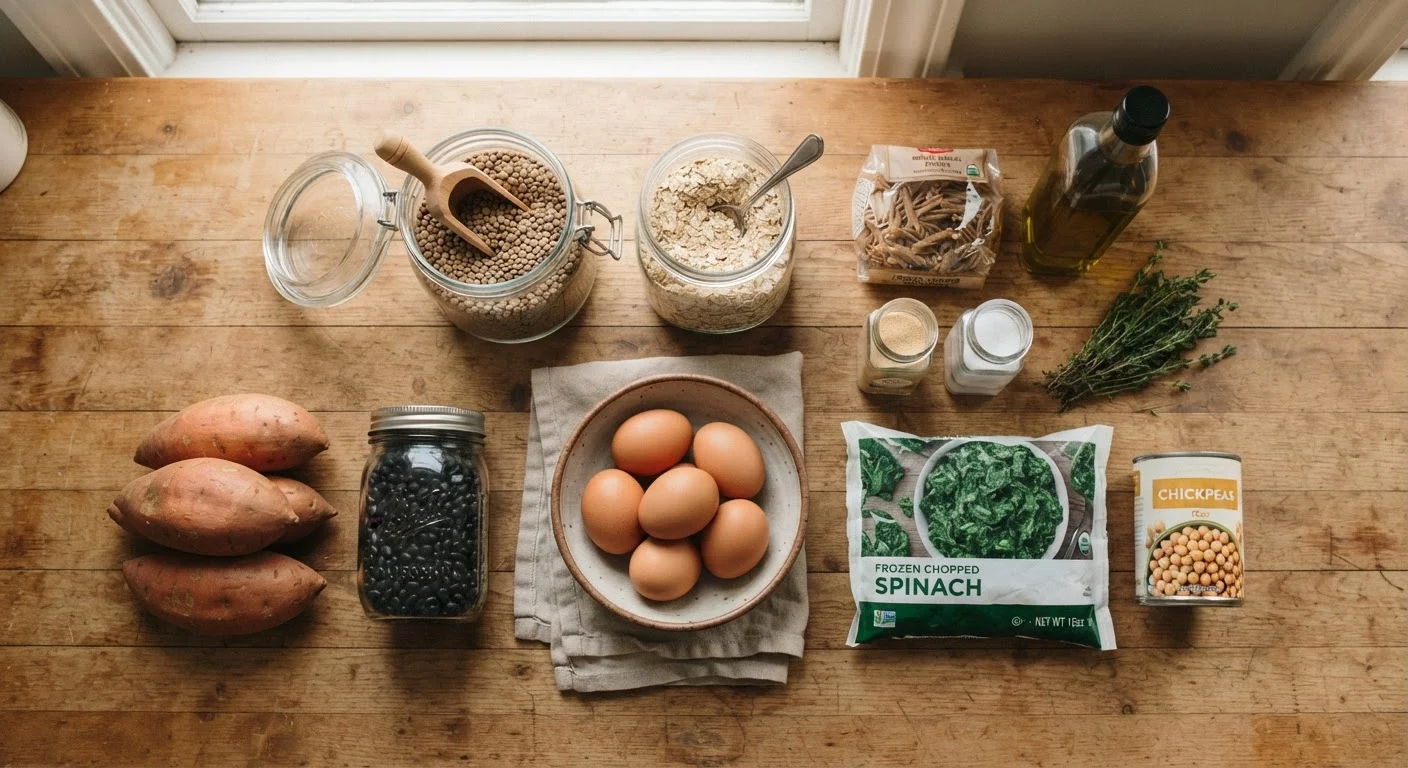
Lentils are among the most cost-effective protein sources available. A one-pound bag typically yields around ten servings and provides protein, iron, folate, and substantial dietary fiber per serving. Unlike dried beans, lentils require no soaking, which reduces preparation time considerably.
Green, brown, and red varieties each have slightly different textures suited to different dishes. Red lentils break down into soups and dals; green and brown lentils hold their shape in salads and grain bowls. Combining lentils with a whole grain like brown rice or whole wheat bread provides a broader amino acid profile than either food alone.
Lentils require no soaking and cost a fraction of most animal proteins per gram.
Rolled oats
Rolled oats offer beta-glucan, a soluble fiber that is associated with supporting healthy cholesterol levels according to well-established research. They also provide magnesium, phosphorus, and plant-based protein. A canister of plain rolled oats is one of the lowest cost-per-serving grain options in any grocery store.
Plain oats avoid the added sugar found in many flavored instant varieties. They work in overnight preparations, cooked porridge, and as a binder or extender in patties and meatballs. Using oats in savory applications, not just breakfast, stretches their value further across the week.
Plain rolled oats cost less per serving than nearly any other grain while delivering fiber and minerals.
Eggs
Eggs contain complete protein, meaning they provide all essential amino acids in one food. They also supply choline, vitamin B12, vitamin D, and selenium. Per gram of protein, eggs are consistently among the most affordable animal-source foods available in the United States.
Versatility keeps eggs useful across every meal. A carton of eggs can support breakfasts, quick weeknight dinners, packed lunches, and baked goods over the course of a week. Stretching affordable proteins across multiple meals follows the same logic here: eggs mixed into fried rice or vegetable frittatas go further than eggs served alone.
Eggs supply complete protein and essential micronutrients at a low cost per gram of protein.
Canned or dried beans
Black beans, kidney beans, chickpeas, and pinto beans all deliver protein, fiber, potassium, and folate. Canned versions are ready to use immediately; dried versions cost less per serving and store for over a year. Both are nutritionally comparable once cooked.
Beans work as a protein extender in dishes that also include small amounts of meat, reducing overall meal cost without reducing satiety. They also function as a complete protein base when paired with grains. For families already spending on name-brand canned goods, switching to store-brand canned beans typically delivers identical nutritional value at lower cost.
Canned beans are ready in seconds and rival more expensive protein sources in fiber and micronutrients.
Sweet potatoes
Sweet potatoes provide beta-carotene (which the body converts to vitamin A), potassium, vitamin C, manganese, and dietary fiber. They are naturally sweet, which makes them palatable to children, and they store well for one to three weeks at room temperature.
A medium sweet potato baked in its skin takes about an hour in the oven or around five minutes in a microwave. That simplicity makes it a practical side dish on busy weeknights. Because they are filling and nutritionally dense, they can reduce the volume of more expensive protein or grain needed to round out a meal.
One sweet potato covers a significant portion of daily vitamin A needs at very low cost.
Canned fish (sardines, tuna, salmon)
Canned sardines, tuna, and salmon provide omega-3 fatty acids, protein, and vitamin D. Sardines and salmon canned with bones also supply a meaningful amount of calcium. These are shelf-stable proteins that cost considerably less per serving than fresh fish.
Sardines are often the most affordable option and have among the lowest mercury levels of any canned fish, which is relevant for pregnant women and young children (consult a healthcare provider for specific guidance for these groups). Tuna and canned salmon mix into grain bowls, pasta, and salads. See our complementary article on frozen and canned produce for context on how preserved foods compare nutritionally to fresh counterparts.
Canned fish delivers omega-3s, protein, and vitamin D at a fraction of fresh fish prices.
Frozen leafy greens
Frozen spinach, kale, and collard greens are harvested and frozen at peak maturity, which preserves most of their water-soluble vitamins. Per dollar, they typically provide more servings of leafy greens than fresh bunches, with far less waste from wilting.
A 10-ounce box of frozen spinach collapses to roughly one cup when cooked, concentrating its iron, magnesium, folate, and vitamin K. It blends into soups, sauces, scrambled eggs, and smoothies without significantly altering flavor. Families skeptical of frozen produce can find more detail in our piece on why frozen vegetables are nutritionally competitive with fresh.
Frozen leafy greens waste less and often cost less per serving than fresh while retaining most nutrients.
Getting the most from these ingredients
Start with what you already cook
Adding new pantry staples works best when they fit into meals your household already eats. If your family regularly makes soup, start with lentils or canned beans. If eggs are a weekend staple, consider adding them to weeknight meals too. Gradual substitution is more sustainable than a full pantry overhaul, and it reduces the risk of unfamiliar ingredients sitting unused.
Stocking these items consistently matters more than buying them perfectly. Dried lentils and canned beans are interchangeable in most recipes; buy whichever costs less per ounce that week. Oats work beyond breakfast in savory patties and baked goods. Canned fish stretches further when mixed with vegetables and whole grains rather than served alone.
Comparing unit prices rather than total package prices gives a clearer picture of actual value. Our nutrition per dollar reference guide covers protein, fiber, and micronutrient density across many of these foods side by side, which can help when deciding between options at the store.
Weekly meal planning is what turns a well-stocked pantry into actual savings. Without a plan, even the cheapest staples can go unused and eventually wasted.
This article is for general informational and educational purposes only and is not a substitute for professional medical or dietary advice. Consult a qualified healthcare provider for guidance specific to your health needs.