
Grocery Shopping Patterns That Quietly Inflate Your Bill Without Improving Nutrition

Key Takeaways
- Shopping without a list consistently leads to impulse purchases that cost more and deliver less nutrition.
- Pre-cut and single-serving packaged foods often cost two to four times more than their whole-food equivalents.
- Store-brand staples and dried or frozen produce frequently match name-brand nutrition at a fraction of the price.
- Unit price comparisons, not package price, reveal the true cost of what you are buying.
- Skipping the perimeter of the store in favor of processed center-aisle items raises spending without improving nutrient intake.
Why spending more does not mean eating better
A higher grocery bill does not guarantee better nutrition. Many families spend significantly more than necessary by following habits that feel practical but consistently work against both their budget and their health goals. The patterns below are common, easy to fall into, and straightforward to change once you recognize them.
For a broader picture of which foods actually deliver the most nutrition per dollar, see affordable nutrient-dense pantry staples.
Buying pre-cut, pre-portioned, or single-serve versions of whole foods.
Why it happens: Convenience packaging saves prep time and feels worth the cost in a busy week. Shoppers rarely compare the per-pound price against the whole version.
Shopping without a list or meal plan, then filling gaps with convenience foods.
Why it happens: Unplanned trips are reactive. Without knowing what meals the week holds, shoppers default to ready-made options that require no planning to use.
Paying name-brand prices for commodity staples where labels are nearly identical.
Why it happens: Brand recognition feels like a quality signal. Familiar packaging creates a sense of reliability that shoppers transfer to nutritional value, even when the ingredients are the same.
Relying on heavily marketed 'health' products to meet nutritional needs.
Why it happens: Front-of-package claims such as 'high protein,' 'immune support,' or 'superfood blend' suggest nutritional superiority. These claims are often legal but loosely regulated, and the products carrying them are almost always more expensive.
Ignoring frozen and canned produce in favor of fresh options year-round.
Why it happens: Fresh produce carries a perception of higher quality and nutritional value. Many shoppers assume frozen or canned means compromised nutrition.
Comparing package prices instead of unit prices.
Why it happens: The sticker price is the most visible number. Larger packages feel like a deal without doing the math, and smaller packages sometimes appear cheaper at a glance.
What these habits look like in a real shopping trip
Most of these patterns are invisible in the moment. Grabbing a bag of pre-washed, pre-cut broccoli florets instead of a whole head feels like a time-saver, and it is. But the convenience premium is real: pre-cut vegetables can cost two to four times more per pound than whole vegetables, with no nutritional difference. The same logic applies to single-serve yogurt cups versus a larger container, or portioned nut packets versus a bulk bag.
40%
Average U.S. household food waste by weight
USDA Economic Research Service estimates that American households waste roughly 30 to 40 percent of the food supply, much of it tied to unplanned purchasing.
2-4x
Price premium for pre-cut vs. whole vegetables
Consumer price comparisons across major grocery chains consistently show that pre-cut vegetables cost two to four times more per pound than equivalent whole vegetables.
$1,500+
Estimated annual overspend from unplanned grocery trips
Research from the Food Marketing Institute has indicated that unplanned in-store purchases are a primary driver of grocery budget overruns for American families.
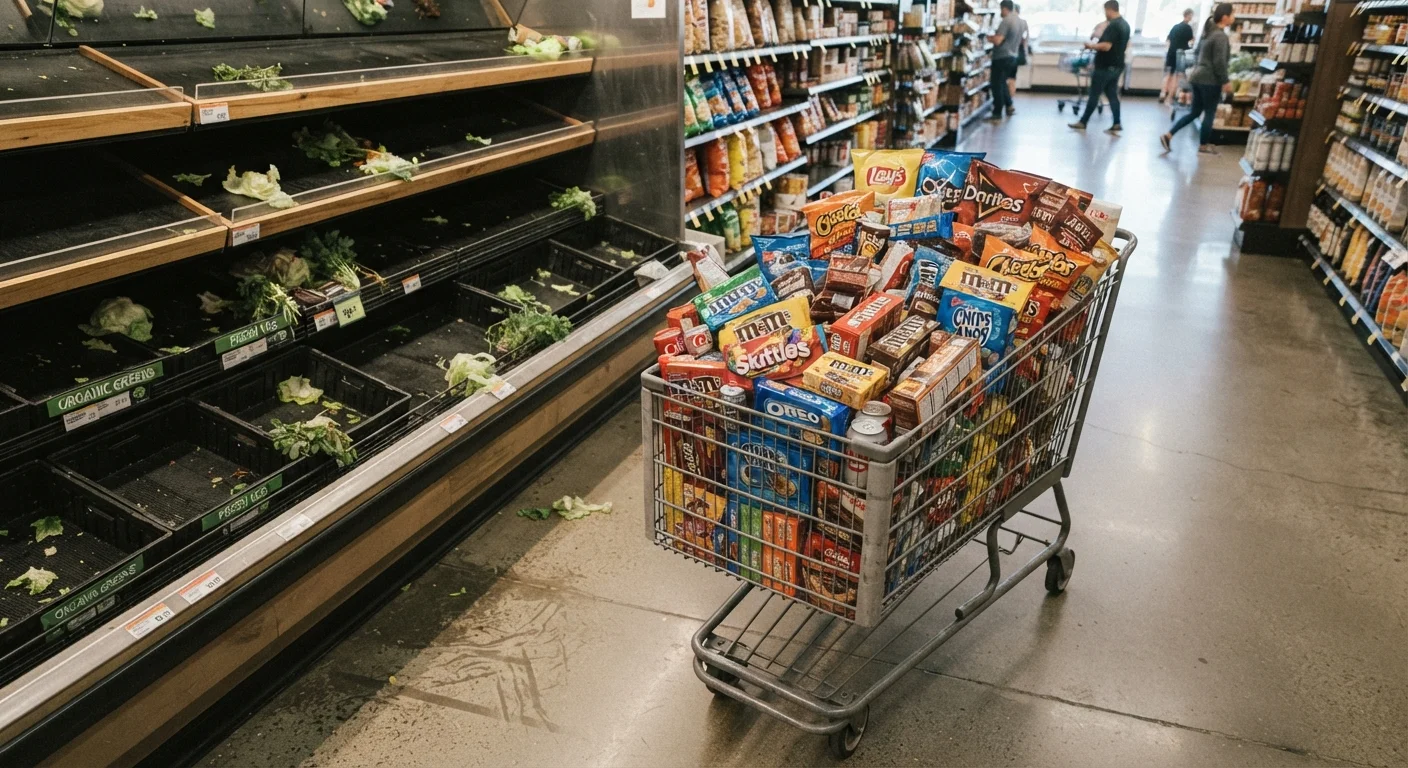
Shopping without a list compounds the problem. Without a plan, most shoppers spend more time in the processed-food aisles, where shelves are designed to prompt unplanned purchases. Those purchases tend to be calorie-dense and nutrient-light. Weekly meal planning directly counters this by anchoring each trip to what you actually need.
Name-brand loyalty is another quiet drain. For staple items such as canned beans, oats, frozen vegetables, and pasta, the nutritional difference between store brands and name brands is generally negligible. A label-by-label comparison confirms that most of the price gap reflects marketing, not ingredients.
If these patterns show up across your household's broader health habits, it is worth noting that similar logic applies elsewhere. Skipping routine checkups to save money often costs more in the long run, much like skipping meal planning leads to higher weekly spending.
This article provides general nutrition and budget information. It is not a substitute for advice from a registered dietitian or other qualified health professional. Individual dietary needs vary, and anyone managing a health condition should consult a professional before making significant changes to their diet.