
Store Brand vs. Name Brand Foods: Nutritional Differences That Actually Matter

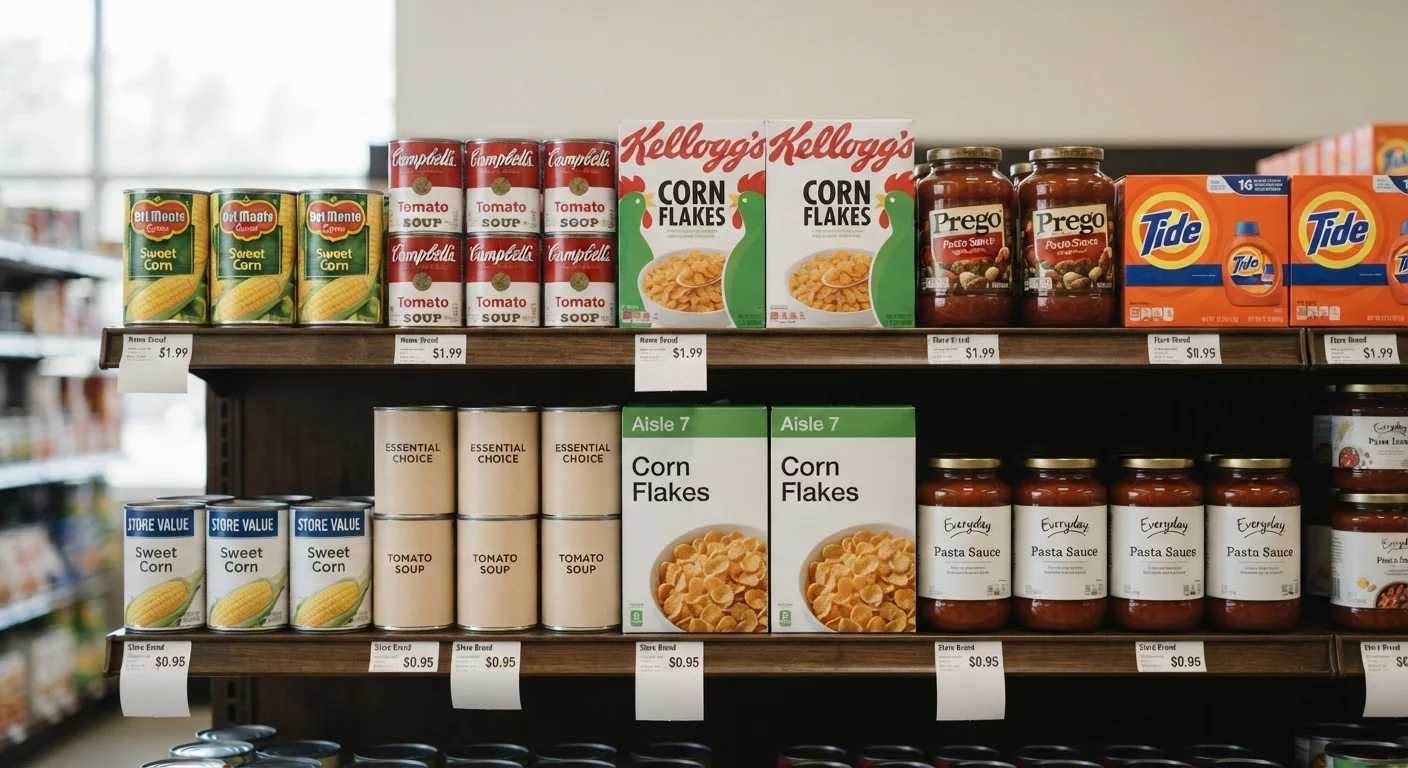
Key Takeaways
- For most staple foods, store brands and name brands deliver nearly identical nutrition per serving.
- Ingredient lists and Nutrition Facts panels are the only reliable tools for comparing two products.
- A few product categories, including some cereals and condiments, show real formulation differences worth checking.
- Store brands typically cost 20 to 30 percent less than name brand equivalents for the same nutritional content.
- Manufacturer standards and retailer specifications often result in store brand products made in the same facilities.
- Consulting a healthcare provider matters more than brand choice for managing specific dietary conditions.
Option A
Store brand foods
The cost-conscious default with a reputation it mostly lives up to.
Best for: Families looking to cut grocery spending without sacrificing core nutritional value on staple items.
Option B
Name brand foods
The familiar choice backed by marketing, not always by meaningfully better nutrition.
Best for: Shoppers who rely on consistent formulations in specific product categories where ingredients genuinely differ.
If you want to reduce grocery spending without changing nutritional intake
Store brand foods
For the vast majority of pantry staples, the Nutrition Facts panel is nearly identical, so the lower price delivers the same dietary value.
If you rely on a specific added-nutrient formulation, such as a fortified cereal or infant formula
Name brand foods
Some name brand products carry distinct fortification levels or ingredient ratios that store brand versions do not always match exactly. Compare labels before switching.
If you are managing sodium, added sugar, or saturated fat for a health condition
Store brand foods
Store brand versions frequently contain less sodium and fewer additives than their name brand counterparts, though this varies by product. Always verify with the label and discuss dietary targets with a healthcare provider.
If you cook from whole ingredients and mainly buy canned goods, grains, or frozen vegetables
Store brand foods
These categories show the smallest formulation differences and the largest price gaps, making store brand the straightforward choice.
What the label actually tells you
The Nutrition Facts panel is a federal regulatory document, not a marketing tool. Every manufacturer producing food for U.S. sale must follow the same FDA labeling rules, which means the data on a store brand can is directly comparable to the data on a name brand can. When you place two cans of diced tomatoes side by side and the sodium, calories, fiber, and vitamin C figures match, that is not a coincidence. It reflects that tomatoes are tomatoes, and the production process for shelf-stable canned vegetables leaves little room for meaningful nutritional divergence.
The ingredient list adds a second layer of information. Ingredients appear in descending order by weight, so a quick scan tells you whether added salt, sugar, or starch appears near the top. Store brands sometimes carry shorter ingredient lists than name brand equivalents because they skip proprietary flavor enhancers or colorings. That is not universally true, but it comes up often enough to make the comparison worth doing at the shelf rather than assuming either direction.
See our reference guide to nutrition per dollar for a practical framework on comparing actual food value across common staples.
Where real differences show up
| Criterion | Store brand | Name brand |
|---|---|---|
| Average price difference | 20-30% lower | Baseline price |
| Canned vegetables (nutrition) | Matches name brand | Standard; no added benefit |
| Dry grains and legumes | Equivalent nutrition | Equivalent nutrition |
| Fortified cereals | Fortification may vary | Specific levels consistent |
| Condiments and sauces | Sodium/sugar varies by product | Sodium/sugar varies by product |
| Frozen plain vegetables | Equivalent nutrition | Equivalent nutrition |
| Ingredient list length | Often shorter | Often includes more additives |
| Label transparency | Same FDA requirements | Same FDA requirements |
Fortified breakfast cereals are one category where formulation details matter. Some name brand cereals carry specific percentages of daily vitamins that store brand versions do not replicate at the same levels. The gap is usually modest and unlikely to affect overall dietary adequacy for most people, but it is real. The fix is simple: read the micronutrient section of the Nutrition Facts panel rather than assuming equivalence.
Condiments and sauces show more variability than most shoppers expect. Two bottles of pasta sauce can differ by 200 milligrams of sodium per serving and several grams of added sugar even within the same price tier, and store brands do not always win that comparison. The answer is still the label, not the brand.
For categories such as dry beans, canned legumes, oats, frozen plain vegetables, and bagged rice, the nutritional case for spending more on a name brand is essentially absent. These are commodity ingredients with little room for reformulation. Nutrient-dense pantry staples like these are where store brand purchasing consistently delivers full value.
The price gap and what it means in practice
Store brands generally cost 20 to 30 percent less than name brand equivalents, according to data from the Food Marketing Institute and similar grocery industry research. For a family spending $800 per month on groceries, applying that discount across eligible staple categories can amount to meaningful annual savings without any change to the nutritional content of meals.
The savings hold up because private label manufacturing is often handled by the same contract facilities that produce name brand goods. Retailers set specifications for their store brand suppliers, and those specifications routinely include nutritional minimums. The packaging costs less. The advertising spend is zero. The food itself is frequently indistinguishable from what sits next to it on the shelf at a higher price.
Common grocery shopping patterns that inflate your bill often include defaulting to name brands out of habit rather than because of any checked difference in the product. Habit is expensive when it applies across dozens of weekly line items.
This article provides general nutrition and consumer information and is not a substitute for advice from a registered dietitian or qualified healthcare provider. If you are managing a specific health condition, consult a professional before making changes to your diet.