

| Protein per cup, cooked lentils | Approx. 18 grams (USDA FoodData Central) |
| Protein per large egg | Approx. 6 grams (USDA FoodData Central) |
| Protein per 5-oz serving, canned tuna | Approx. 25 grams (USDA FoodData Central) |
| Fiber per cooked cup, black beans | Approx. 15 grams (USDA FoodData Central) |
| Cost savings, dried vs. canned legumes | Roughly 40-60% less per serving (General market estimate; varies by region and store) |
| Fiber per half-cup dry oats | Approx. 4 grams (USDA FoodData Central) |
What nutrient density per dollar actually means
Price per ounce tells you how much food you get. Nutrient density tells you how much nutrition that food contains. Combining the two gives a more complete picture: how many grams of protein, fiber, or key micronutrients you receive for each dollar spent.
No single formula covers every nutrient, and no food excels at everything. The goal is to identify foods that deliver strong nutritional return across multiple categories without requiring a large budget. This reference covers protein, dietary fiber, and select micronutrients because those are the categories where affordable foods most reliably differ from one another.
For context on which pantry staples consistently score well on this measure, see a detailed look at low-cost nutrient-dense foods.
Nutrient density
The amount of beneficial nutrients a food provides relative to its total calories. A nutrient-dense food supplies significant vitamins, minerals, protein, or fiber without excess added sugar, sodium, or saturated fat.
Cost per serving
The price of one standard portion of a food, calculated by dividing the total package price by the number of servings in that package. It is a more useful comparison metric than total package price.
Complete protein
A protein source that supplies all nine essential amino acids in adequate amounts. Animal proteins are generally complete; most individual plant proteins are not, though combining plant sources over the course of a day can meet amino acid needs.
Dietary fiber
Indigestible plant carbohydrates that support digestive function and are linked to heart health and blood sugar regulation. USDA guidelines recommend 25 to 38 grams per day depending on age and sex.
Beta-carotene
A plant pigment the body converts to vitamin A. Found in orange and yellow produce such as sweet potatoes and carrots, it supports vision, immune function, and cell growth.
Unit price
The cost of a product expressed per standard unit of weight or volume (e.g., per ounce or per 100 grams). Retail shelves are required to display unit prices in most U.S. states, making cross-product comparisons straightforward.
Protein value across common low-cost sources
Protein cost varies widely. Dried legumes typically provide more grams of protein per dollar than most animal proteins, though animal proteins generally supply all essential amino acids in a single source. A practical approach combines both categories.
| Protein per cup, cooked lentils | Approx. 18 grams (USDA FoodData Central) |
| Protein per large egg | Approx. 6 grams (USDA FoodData Central) |
| Protein per 5-oz serving, canned tuna | Approx. 25 grams (USDA FoodData Central) |
| Fiber per cooked cup, black beans | Approx. 15 grams (USDA FoodData Central) |
| Cost savings, dried vs. canned legumes | Roughly 40-60% less per serving (General market estimate; varies by region and store) |
| Fiber per half-cup dry oats | Approx. 4 grams (USDA FoodData Central) |
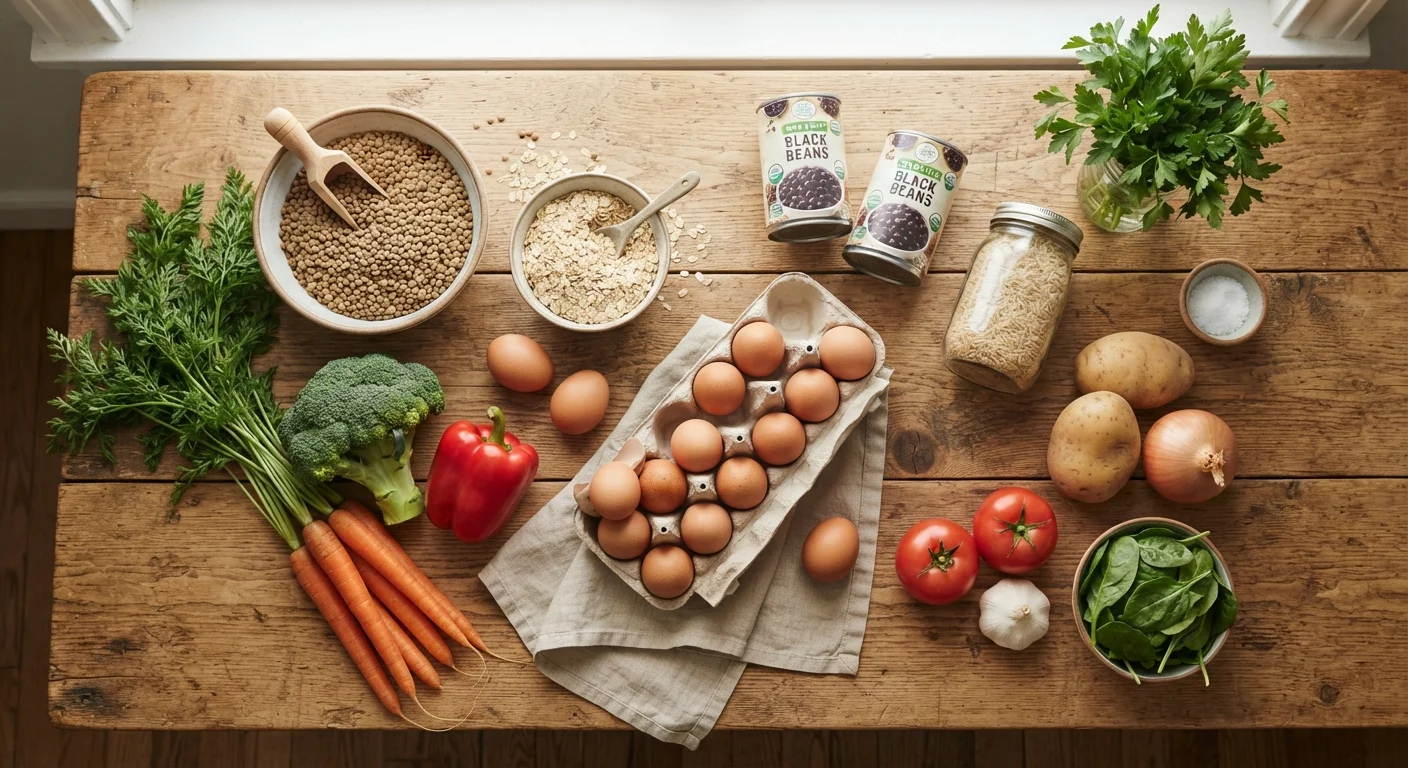
Eggs supply roughly 6 grams of protein each and contain all essential amino acids. Canned tuna delivers around 25 grams of protein per 5-ounce serving at a low unit cost. Dried black beans, chickpeas, and lentils average 15 to 18 grams of protein per cooked cup, with lentils cooking fastest and requiring no soaking.
Buying dried legumes instead of canned typically reduces cost per serving by 40 to 60 percent, though the nutritional difference between the two forms is small. The nutritional case for legumes as protein sources covers their full micronutrient profile in detail. For strategies on extending animal protein further, see how to stretch a pound of ground meat into a week of meals.
Fiber and micronutrients: where affordable foods do well
Dietary fiber is almost entirely a plant-food nutrient, and many of the most affordable plant foods rank among the highest in fiber per dollar. Cooked lentils provide about 16 grams of fiber per cup. Cooked oats supply around 4 grams per half-cup dry serving, along with beta-glucan, a soluble fiber associated with cholesterol management in the context of a balanced diet. Frozen peas, sweet potatoes, and canned tomatoes all deliver fiber plus micronutrients at low per-serving costs.
For micronutrients, a few affordable foods stand out. Spinach (fresh or frozen) is a reliable source of vitamins A and K, folate, and iron. Sweet potatoes supply vitamin A precursors (beta-carotene) and potassium. Eggs provide choline, vitamin B12, and vitamin D. Canned salmon, including bones, supplies calcium and omega-3 fatty acids.
Whole grains differ in their micronutrient profiles even when prices are similar. Oats, brown rice, and barley each offer distinct nutritional advantages, so rotating among them supports broader nutrient coverage.
Reading unit prices and labels to make comparisons work
Shelf unit prices (cost per ounce or per 100 grams) let you compare products within a category. Pairing that with the Nutrition Facts label gives you a cost-per-nutrient estimate. Divide the price per serving by the grams of the nutrient you care about to get a rough figure.
Some shopping habits inflate the grocery bill without improving nutrition. Common patterns that quietly raise your bill are worth reviewing before your next trip. On the label comparison side, store brands and name brands often differ less than expected in nutritional content, though it is worth checking ingredient lists for items like canned fish or fortified cereals where formulations can vary.
Seasonal produce generally costs less per serving and tends to score well on both freshness and nutrient retention. Frozen vegetables are nutritionally comparable to fresh for most purposes and are often less expensive per cup of cooked serving.
This article is for general informational purposes only and is not medical or dietary advice. Consult a qualified healthcare professional or registered dietitian for guidance specific to your health needs.