

Key Takeaways
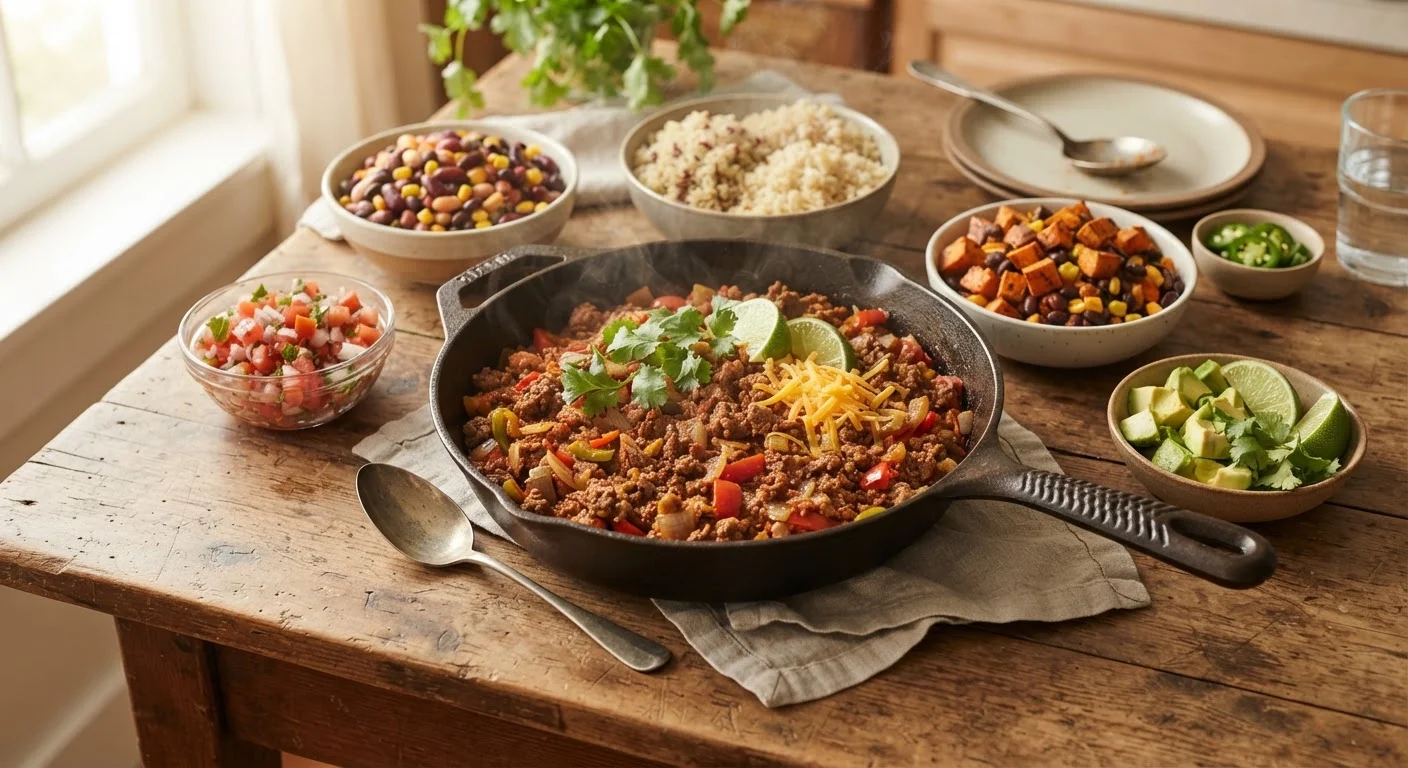
- One pound of ground meat can stretch across four to five meals when combined with high-fiber extenders like beans, lentils, or oats.
- Cooking and portioning meat in bulk at the start of the week saves time and reduces the temptation to skip cooking.
- Protein extenders add fiber and micronutrients that ground meat alone does not provide.
- Planning meals that share a single cooked batch reduces food waste and grocery spending.
- Proper storage of cooked ground meat is essential for food safety throughout the week.
What you will need
Why one pound goes further than you think
A single pound of ground meat, whether beef, turkey, pork, or chicken, contains roughly 70 to 80 grams of protein, depending on fat content and preparation. Most family dinner recipes call for far more than the body needs in a single sitting. The USDA Dietary Guidelines suggest adults need around 5 to 6.5 ounce-equivalents of protein foods daily, which means a modest portion of cooked ground meat per person per meal is nutritionally adequate when paired with other foods.
The strategy covered here is not about eating less. It is about pairing ground meat with affordable extenders, such as canned or dried legumes, cooked grains, and vegetables, so the protein and flavor distribute across multiple meals without the weekly grocery bill climbing to match. For more foundational thinking on this approach, see eating well on a tight budget.
Extenders work because ground meat has a crumbly texture that blends with other ingredients. A reader tasting a meat sauce with lentils stirred in rarely notices the substitution once seasoning is added. The nutritional benefit is real: lentils add iron, folate, and fiber that ground meat lacks. Beans and lentils are among the most cost-effective protein sources available.
What you will need
Step-by-step: cooking and stretching the batch
The steps below assume a standard one-pound package of ground meat. All timings are approximate and will vary by stove and pan size. Follow safe food handling practices throughout, and consult the USDA FoodKeeper guidelines for storage times specific to your household.
Gather your extenders before you cook
Before browning the meat, decide which extenders you will use for the week. Good options include:
- Canned or cooked lentils (brown or green): roughly 18 grams of protein and 15 grams of fiber per cup
- Canned black beans or kidney beans: about 15 grams of protein per cup
- Rolled oats (plain, uncooked): about 1/4 cup per pound of meat blends in without changing texture much
- Finely diced mushrooms or grated zucchini: add bulk and moisture
Having these ready before you start prevents mid-cook scrambling and makes portioning easier afterward.
Brown the meat with minimal seasoning
Cook the entire pound in a skillet over medium-high heat, breaking it into small crumbles. Season only with salt and pepper at this stage. Keeping the base plain means you can take each portion in a different flavor direction later in the week.
Cook until no pink remains and the internal temperature reaches 160 degrees Fahrenheit (165 degrees Fahrenheit for ground poultry), as specified by USDA food safety guidelines. Drain excess fat by tilting the pan and spooning it off, or by transferring the meat briefly to a plate lined with a paper towel.
Mix in your extenders while the meat is still warm
Add your chosen extenders to the skillet while the meat is still hot. For lentils or beans, add one cup per half-pound of meat and stir well. For oats, add 1/4 cup per pound and let them absorb moisture for two to three minutes on low heat. For vegetables like mushrooms or zucchini, saute them separately first until their moisture cooks off, then stir them into the meat.
The warm meat helps the extenders absorb any remaining seasoning and fat, which improves flavor distribution across the batch.
Divide into portions and store safely
Weigh or visually divide the extended batch into equal portions, one per planned meal. Transfer each portion to a separate airtight container. Label each container with the date cooked.
- Refrigerate portions you will use within three to four days (USDA guideline for cooked ground meat).
- Freeze any portions intended for later in the week. Frozen cooked ground meat stays safe indefinitely but is best used within three to four months for quality.
Thaw frozen portions in the refrigerator overnight, not on the counter, to keep them out of the temperature danger zone (40 to 140 degrees Fahrenheit).
Season each portion separately at mealtime
When you are ready to use a portion, reheat it in a skillet or microwave, then add meal-specific seasoning. This is where variety comes from: the same plain base becomes taco filling with cumin and chili powder, a pasta sauce base with Italian herbs, or an Asian-inspired stir-fry with garlic and a small amount of soy sauce. Adding seasoning at the end gives you control over sodium levels, which matters if family members have different dietary needs.
This article is for general informational purposes only. For personalized nutrition or dietary guidance, consult a registered dietitian or qualified healthcare professional.
Meal ideas that share one cooked batch
Once the base batch is cooked and portioned, a short list of meal directions keeps the week varied without requiring separate shopping trips. Consider these options:
- Taco night: season a portion with cumin and chili powder, extend with black beans, serve in corn tortillas with shredded cabbage and salsa.
- Pasta sauce: simmer a portion with canned crushed tomatoes, garlic, and dried herbs over whole-wheat pasta.
- Stuffed peppers: mix a portion with cooked brown rice and diced tomatoes, spoon into halved bell peppers, and bake at 375 degrees Fahrenheit until the peppers soften.
- Grain bowl: combine a portion with cooked farro or barley, roasted frozen vegetables, and a drizzle of low-sodium soy sauce or hot sauce.
- Soup or stew: add a portion to a pot with low-sodium broth, canned beans, diced potato, and whatever vegetables are on hand.
Each option uses ingredients likely already in a well-stocked pantry. For a broader look at which pantry staples deliver the most nutritional value per dollar, see affordable nutrient-dense pantry foods.
Combining this batch-cooking habit with a written weekly plan cuts both waste and impulse purchases. Weekly meal planning habits covers how to build that routine consistently.