
The Nutritional Case for Beans, Lentils, and Dried Peas as Protein Sources

Key Takeaways
- A cooked cup of most beans or lentils provides 15 to 18 grams of protein at very low cost.
- Legumes supply soluble fiber that supports digestive health and helps manage blood sugar response.
- Dried legumes cost significantly less per serving than canned versions and store well for months.
- Pairing legumes with grains across the day covers the full range of essential amino acids.
- Iron, folate, potassium, and zinc in legumes support everyday nutritional needs for families.
- Legumes work as a partial or full meat substitute in soups, stews, tacos, and grain bowls.
Legumes as protein sources
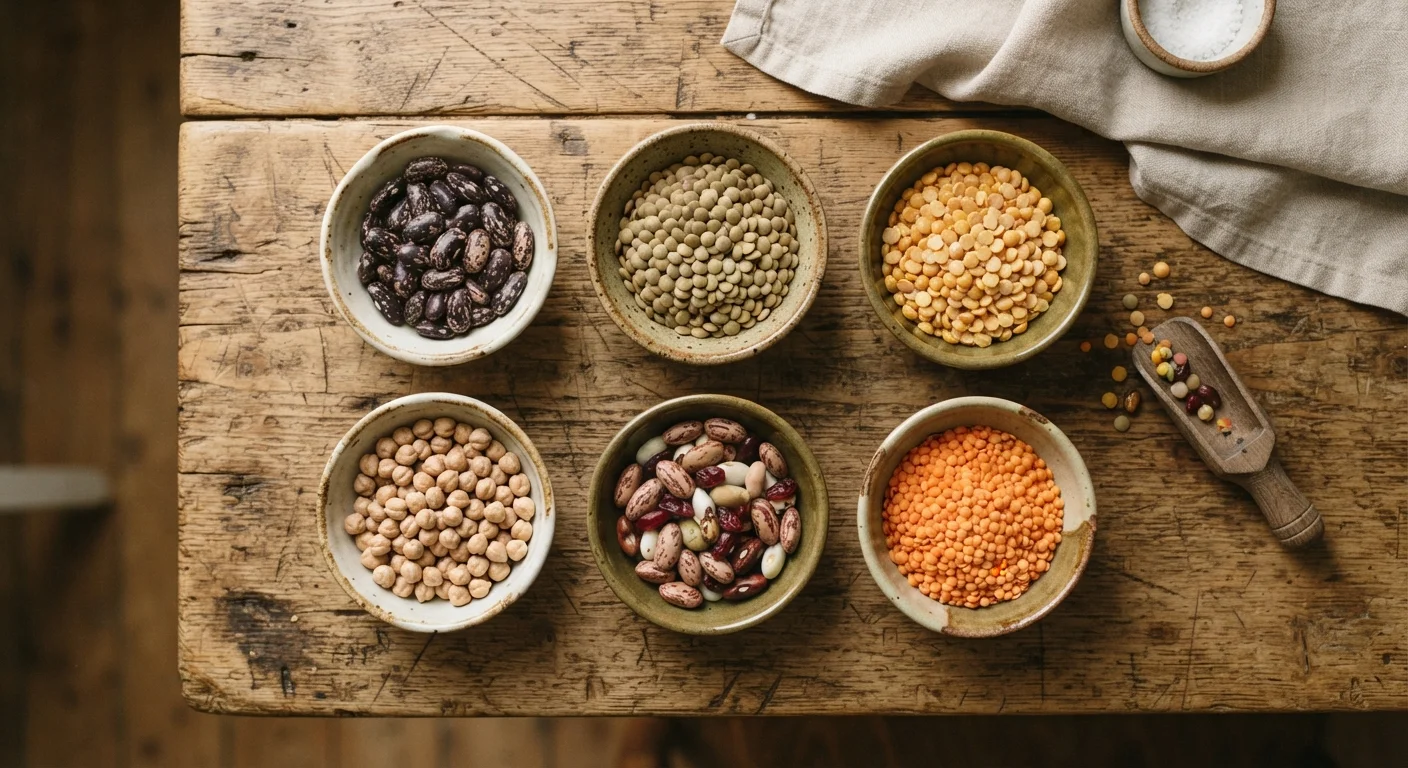
Beans, lentils, and dried peas are plant-based foods in the legume family that supply meaningful amounts of protein alongside fiber, vitamins, and minerals. Unlike most plant foods, legumes provide enough protein per serving to function as a primary protein source in a meal. The USDA Dietary Guidelines count legumes in both the vegetable group and the protein foods group because of this dual nutritional role.
Legume proteins are generally lower in the amino acid methionine compared to animal proteins; pairing them with grains across the day provides a complete amino acid profile without requiring combination at every meal.
What legumes actually contain
The protein content of legumes is the first number most people check, and it holds up well. A cooked cup of lentils provides around 18 grams of protein. Black beans, pinto beans, navy beans, and chickpeas each land between 14 and 16 grams per cooked cup. These figures are comparable to roughly 2 to 2.5 ounces of cooked chicken breast.
Protein is only part of the picture. Legumes are one of the few foods that supply substantial fiber and substantial protein at the same time. A cup of cooked black beans contains about 15 grams of dietary fiber, mostly soluble. Soluble fiber slows digestion, which moderates blood sugar rise after eating, and feeds beneficial gut bacteria. Most Americans fall well short of the recommended daily fiber intake, and legumes are a direct remedy.
The micronutrient profile adds more weight to the case. Legumes supply folate (important for cell repair and fetal development), potassium (which supports blood pressure regulation), iron, and zinc. Lentils are particularly high in folate: one cooked cup can cover more than 90 percent of the recommended daily intake for most adults. For families where fresh produce is limited by budget or season, legumes close nutritional gaps that other affordable foods may leave open.
18g
Protein per cooked cup of lentils
According to USDA FoodData Central nutrient data for cooked lentils.
15g
Dietary fiber per cooked cup of black beans
According to USDA FoodData Central nutrient data for cooked black beans.
90%+
Daily folate covered by one cup of cooked lentils
Based on USDA nutrient data compared to the recommended dietary allowance for adults.
Cost compared to animal protein
Dried beans and lentils typically cost less per pound than nearly any other protein source at the grocery store. A pound of dried lentils yields roughly 2.5 pounds of cooked lentils, enough for six to eight servings. At common retail prices, the protein cost per gram from dried legumes is a fraction of what the same gram costs from beef, pork, or even chicken thighs.
Canned beans are more convenient and still affordable, though dried versions offer better value when cooking time allows. Rinsing canned beans removes a substantial amount of added sodium, which makes them nutritionally close to home-cooked dried beans. For a comparison of how legumes stack up against other affordable pantry staples on a per-dollar basis, see the nutrition per dollar reference guide.
Families who already stretch meat across multiple meals can use legumes as a partial replacement in the same dishes. Adding a cup of cooked black beans or lentils to ground meat in tacos or chili reduces the meat required while keeping protein levels similar. That approach is covered in more detail in the guide to stretching a pound of ground meat.
How legumes fit into a balanced family diet
The USDA Dietary Guidelines suggest that most Americans could benefit from eating more legumes. The guidelines recommend 1.5 cups of legumes per week for a standard 2,000-calorie diet, though higher intake is consistent with good health. Many traditional diets around the world include legumes daily without any protein deficiency concerns.
For families building meals around a tight grocery budget, legumes pair well with whole grains to cover nutritional needs across the day. Brown rice and lentils, oats and split pea soup, or corn tortillas with black beans are all combinations that together provide a full amino acid range. The whole grains on a budget guide covers how to choose and cook affordable grains that complement legumes in weekly meal planning.
Iron absorption from legumes is lower than from meat because plant-based iron (non-heme iron) is absorbed less efficiently. Eating legumes alongside foods high in vitamin C, such as tomatoes, bell peppers, or citrus juice, increases non-heme iron absorption. This is worth noting for families where red meat is rare, particularly for young children and those who are pregnant, who have higher iron needs. Consult a healthcare provider or registered dietitian for guidance on iron needs for specific household members.
Legumes belong in the broader context of a pantry stocked with nutrient-dense, low-cost ingredients. The affordable nutrient-dense pantry guide places them alongside other staples that consistently deliver nutritional value per dollar. For families starting from scratch with budget-conscious eating, eating well on a tight grocery budget sets out the core framework for making these choices work week to week.
This article is for general informational purposes only and is not a substitute for advice from a qualified healthcare professional or registered dietitian. Nutritional needs vary by individual. Consult a professional before making significant changes to your diet, particularly for children, pregnant individuals, or those with existing health conditions.