
Eating Well on a Tight Grocery Budget: A Practical Starting Point for Families

Key Takeaways
- Measuring food value by cost per serving and nutrients delivered helps stretch any grocery budget further.
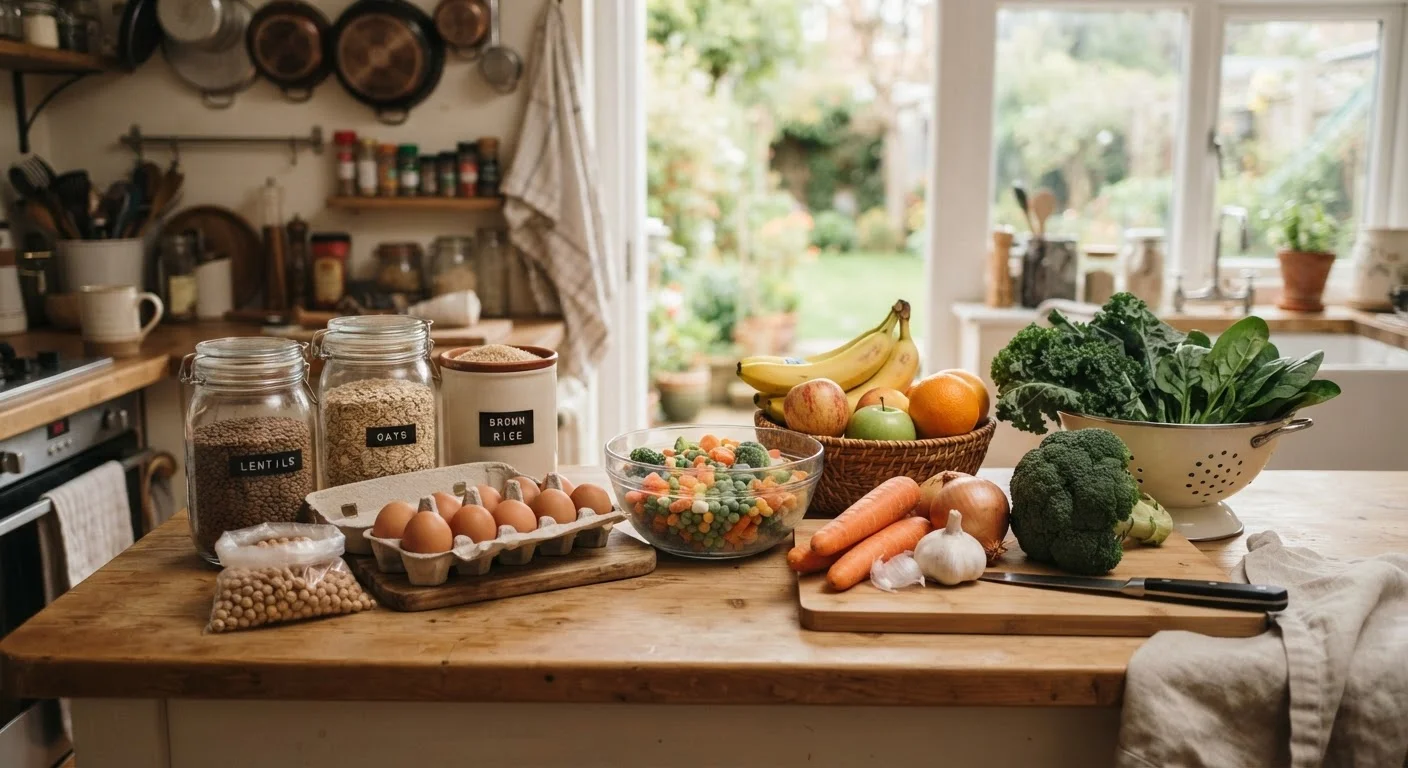
- Dried legumes, eggs, oats, brown rice, and frozen vegetables are among the most cost-efficient foods available in most U.S. stores.
- Meal planning before shopping reduces impulse purchases and lowers food waste, two of the fastest ways to overspend.
- Frozen and canned produce are nutritionally comparable to fresh and often cost significantly less.
- Small, consistent shopping habit changes compound over time into meaningful household savings.
Start here
Why nutrition per dollar is the right starting point
Next
The foods that consistently deliver on both counts
Then
How meal planning connects the pieces
Watch out for
Shopping habits that work against your budget
Build on this
Where to go from here
Why nutrition per dollar is the right starting point
Most grocery budget advice focuses on spending less. That is only half the equation. Spending less on foods that provide little nutritional value does not actually help a family eat well. The more useful measure is how much protein, fiber, and micronutrients a food delivers per dollar spent.
This concept, sometimes called nutrient density per dollar, is how dietitians and public health researchers evaluate food access. The USDA's dietary guidelines consistently point to whole grains, legumes, vegetables, and lean proteins as foods that supply the widest range of nutrients at the lowest cost. Families who anchor their grocery lists around these categories generally get more from every dollar than those who buy by habit or by convenience.
Applying this lens does not require a spreadsheet. It requires a rough sense of which food categories offer consistent value and which ones inflate the bill without improving nutrition. For a closer look at specific numbers, see our nutrition per dollar reference guide.
Nutrient density
How many vitamins, minerals, protein, and fiber a food provides relative to its calorie content. A nutrient-dense food gives you a lot of nutritional value without a lot of empty calories.
Complete protein
A protein source that contains all nine essential amino acids the body cannot make on its own. Eggs, meat, and dairy are common examples.
Legumes
The food category that includes dried beans, lentils, chickpeas, and peas. Legumes are high in plant-based protein, fiber, and several key minerals.
Unit price
The cost of a product per standard unit of measurement, such as per ounce or per serving. Comparing unit prices is the most direct way to tell which size or brand gives more value.
Whole grains
Grains that still contain the bran, germ, and endosperm, such as oats, brown rice, and barley. They supply more fiber and B vitamins than refined grains like white rice or white flour.
The foods that consistently deliver on both counts
Certain foods appear repeatedly in nutrition research because they are affordable, widely available, and nutritionally dense. Dried lentils and beans are among the clearest examples: they supply plant-based protein, iron, folate, and fiber at a cost that makes most other protein sources look expensive by comparison. Eggs are similarly efficient, providing complete protein, B vitamins, and choline at a low per-serving price.
Oats, brown rice, and barley supply complex carbohydrates, fiber, and B vitamins. They store well, cook from scratch without much effort, and work across breakfast, lunch, and dinner. For more on how these grains compare, see our article on whole grains on a budget.
Frozen and canned vegetables fill the produce gap at a fraction of fresh prices in most regions. Research into food processing shows that freezing locks in nutrients shortly after harvest. Our article on why frozen and canned vegetables are nutritionally competitive covers the evidence in detail. When choosing canned goods, versions with no added salt or sugar give the most straightforward nutritional value.
For a curated list of pantry staples worth keeping on hand, see our guide to affordable nutrient-dense pantry foods.
How meal planning connects the pieces
Knowing which foods are cost-efficient does not automatically lower a grocery bill. Buying the right ingredients only helps if those ingredients actually get used. Meal planning is the mechanism that connects smart purchasing to actual meals on the table.
A basic weekly plan, even covering just four dinners, lets a household shop with a defined list. That reduces impulse buys and makes it easier to use ingredients across multiple meals before they spoil. A pound of ground meat planned into three different dinners costs far less per serving than three separate protein purchases. Our guide on stretching a pound of ground meat across a week of meals covers this approach in practical detail.
Food waste is one of the fastest ways a tight budget quietly drains. The USDA estimates that a significant share of food purchased by households is thrown away. Planning meals before shopping, and checking what is already at home first, cuts this loss directly. For habit-building advice, see our article on weekly meal planning habits that reduce food waste and spending.
Shopping habits that work against your budget
Even with a solid list, certain common shopping patterns erode savings without adding nutritional value. Pre-washed and pre-cut vegetables can cost two to three times more per serving than their whole equivalents with identical nutritional profiles. Single-serve packaging, flavored instant packets, and heavily marketed health products all carry significant price premiums relative to their basic counterparts.
Buying in bulk is worth doing for shelf-stable staples that your household consistently uses: oats, dried beans, brown rice, and canned tomatoes are good candidates. Bulk purchasing only saves money when the food actually gets used before it expires or spoils.
Brand loyalty can also quietly inflate costs. Store-brand dried goods, canned vegetables, and frozen produce are functionally identical to national brands in nutritional terms. Comparing unit prices, the cost per ounce or per serving shown on most shelf labels, makes these differences visible at a glance.
For a fuller look at which shopping patterns most consistently cost families money without improving nutrition, see our article on grocery shopping patterns that quietly inflate your bill.
Check the unit price, not the package price
Most U.S. grocery store shelf labels show a unit price, the cost per ounce or per serving, in small print. Comparing this number across sizes and brands takes seconds and often reveals that a larger or store-brand version costs half as much per serving. This one habit, applied consistently, is one of the most direct ways to reduce a grocery bill without changing what you eat.
Where to go from here
Budget-conscious eating is a skill built in small steps, not a complete overhaul applied at once. Starting with one or two staple foods, planning a handful of meals around them, and checking unit prices on a few categories each shopping trip adds up over time without requiring a dramatic change to how a family eats.
Managing food costs also connects to broader household health spending. Our hub on managing health costs covers related strategies for keeping everyday healthcare expenses in check.
This article is for general informational purposes only and is not medical or dietary advice. Nutritional needs vary by individual. Consult a qualified healthcare professional or registered dietitian for guidance specific to your circumstances.