
Outdoor Fitness vs. Indoor Home Workouts: Weighing the Practical Differences

Key Takeaways
- Outdoor and indoor home workouts both cost nothing when you stick to bodyweight or park-based movement.
- Weather, safety, and available space are the most practical factors separating the two options.
- Indoor workouts offer more schedule control, while outdoor movement adds variety and fresh air.
- Most families do well mixing both rather than committing exclusively to one setting.
- Consult a healthcare professional before starting any new exercise routine, especially for children or those with health conditions.
Our Verdict
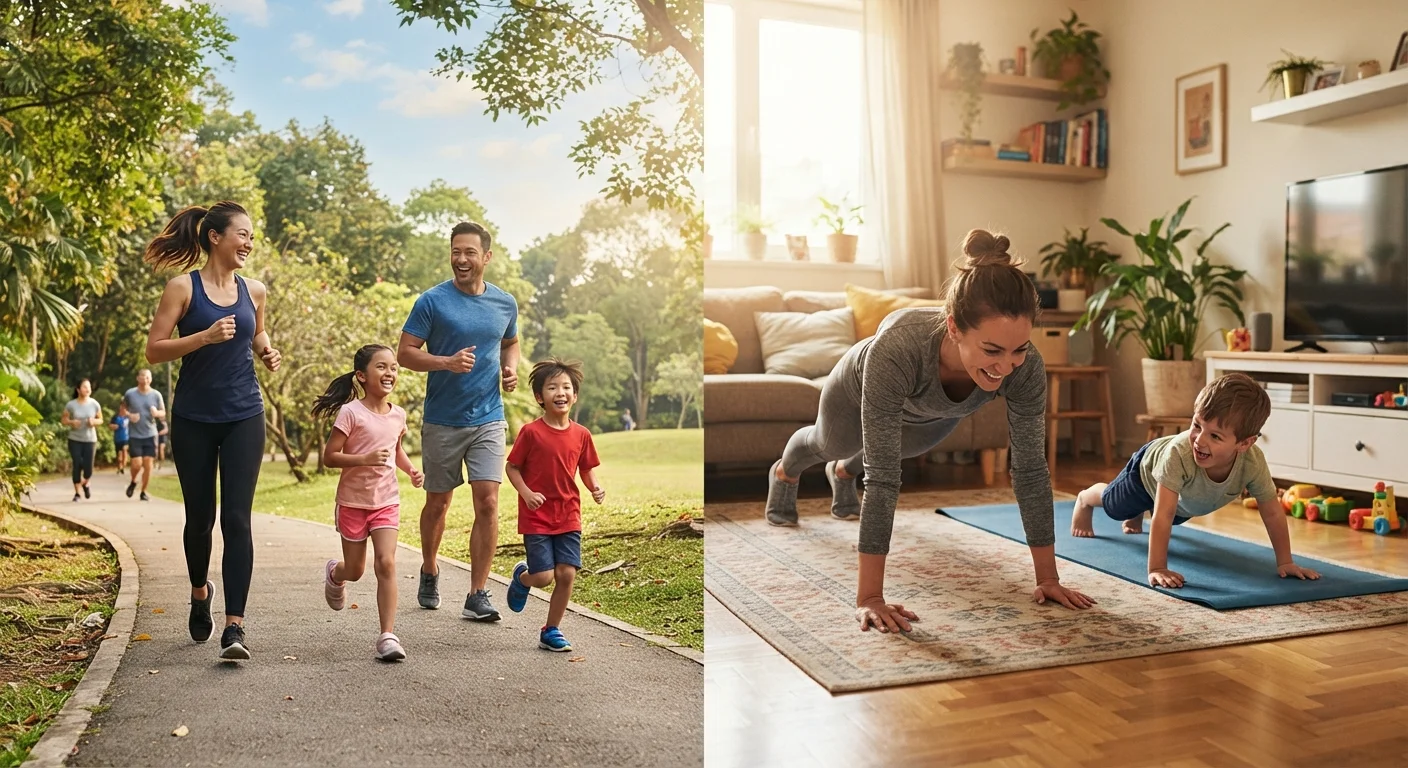
Neither outdoor fitness nor indoor home workouts is objectively superior. Outdoor settings provide more space, varied terrain, and natural light, while home workouts offer weather-proof consistency and privacy. The practical winner for most families is a flexible combination of both.
| Best for | Recommended |
|---|---|
| Families with safe parks or sidewalks nearby | Outdoor fitness |
| Households in extreme climates or with limited outdoor access | Indoor home workouts |
| Parents managing unpredictable schedules | Indoor home workouts |
| Families wanting to build activity habits together | A mix of both settings |
Cost: both options start at zero
The most common concern for value-seeking families is price, and here both options are equal at the baseline. Outdoor fitness uses public land: parks, sidewalks, playgrounds, trails, and open fields are free to access. Indoor home workouts require no equipment when you focus on bodyweight movements such as push-ups, squats, lunges, and planks.
Costs appear only when families choose to add them. Outdoor exercisers sometimes buy running shoes or sun protection; indoor exercisers may eventually want a yoga mat or resistance band. Neither purchase is required to start. See our comparison of gym membership versus home workouts if paid options ever enter the conversation.
Weather and scheduling reliability
Weather is the single biggest practical constraint for outdoor fitness. Extreme heat, ice, heavy rain, and air quality alerts can shut down an outdoor session without warning. Families in northern climates face three to four months where outdoor exercise becomes genuinely difficult for younger children.
Indoor home workouts remove that variable entirely. A 20-minute circuit in the living room happens on the same day regardless of conditions outside. That consistency matters for building habits over weeks and months.
On the other side, indoor space is its own constraint. Small apartments or crowded rooms limit the movements a family can safely perform together. A single adult can manage most bodyweight exercises in a tight space; two adults and two kids need considerably more room.
| Outdoor fitness | Indoor home workouts | |
|---|---|---|
| Baseline cost | Free (public spaces) | Free (no equipment needed) |
| Weather dependence | High, seasonal disruptions likely | None |
| Space required | Abundant, flexible | Limited by home size |
| Activity variety | Running, trails, group games | Bodyweight, yoga, stretching |
| Privacy | Low, public setting | High, controlled environment |
| Schedule flexibility | Weather and daylight dependent | Any time, any day |
| Child engagement | Generally high with open space | Varies, can feel repetitive |
Safety considerations for families
Outdoor safety depends heavily on local conditions. Traffic, uneven surfaces, unfamiliar terrain, and sun exposure are real factors, particularly with children. Early morning or late afternoon sessions reduce heat exposure in summer. Well-lit, populated areas matter when exercising at dusk.
Indoor workouts carry their own hazards: slipping on hard floors, insufficient clearance between family members during movement, and overheating in poorly ventilated rooms. A cleared floor space, non-slip surfaces, and open windows address most of these concerns without spending anything.
For families with members who have existing health conditions, or households that include very young children or older adults, it is worth speaking with a doctor before establishing any new routine. General exercise information is not a substitute for personalized medical guidance.
Our family fitness readiness checklist covers practical safety questions to work through before your household begins.
Start with a two-week trial of both
Rather than committing to one setting upfront, try alternating between outdoor and indoor sessions for two weeks. Track which days your family actually completes the workout and which get skipped. That data tells you more about what works for your household than any general advice can. Adjust your default setting based on what you observe.
Motivation and consistency over time
Outdoor settings tend to feel less repetitive. Changing scenery, fresh air, and the presence of other people in a park can make movement feel less like exercise and more like a normal part of the day. Research published in health and environmental psychology literature consistently finds that outdoor physical activity is associated with higher enjoyment ratings, though individual responses vary.
Home workouts make it easier to remove excuses. There is no commute, no weather check, and no need to get children dressed for outside. For parents with unpredictable schedules, that friction reduction often means the workout actually happens.
Mapping out a weekly exercise plan around a family schedule is one practical way to decide in advance which days use which setting, so neither approach gets abandoned when life gets busy.
Activity variety and what each setting supports well
Outdoor spaces naturally support running, cycling, hiking, playground circuits, and group games. These are activities that are difficult or impossible to replicate indoors without equipment. Children in particular tend to move more freely when given open space, and outdoor movement has well-documented connections to how physical activity habits form in children.
Indoor workouts are better suited to structured strength and flexibility work: bodyweight circuits, yoga flows, stretching routines, and core exercises. These translate well to small spaces and can be done quietly, which matters in apartments or during nap times.
Families who want a wide range of activity across the week will find that relying on only one setting limits what they can do. Our guide to free fitness activities for the whole family lists options that span both settings and require nothing to buy.
This article is for general informational purposes only and is not medical advice. Consult a qualified healthcare professional before starting a new exercise program, particularly for children, older adults, or individuals with existing health conditions.